

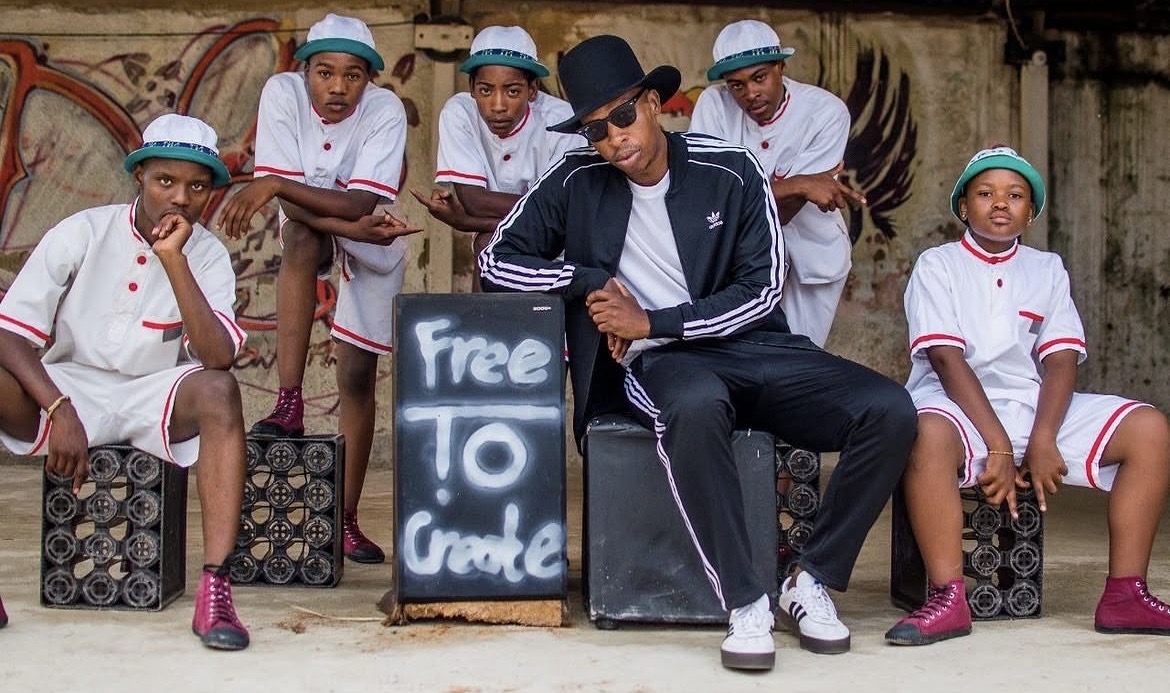
For Jarrel Mathebula, dance has never been only about performance, nor has it been only about talent, rhythm or the ability to command attention through movement. It has been a way to survive what could have hardened him, to express what language could not always hold and to build something meaningful from the difficult realities of growing up in Tembisa.
As a young person, Jarrel understood how easily pain could turn into anger when there were few safe spaces to process it and how easily young people could be pulled into destructive patterns when their energy had nowhere constructive to go. Music and movement gave him another way through. Pantsula, with its fast footwork, attitude, discipline and unmistakable cultural identity, became more than a dance style. It became a form of focus, freedom and self-expression.
In 2005, Jarrel co-founded the Indigenous Dance Academy to create opportunities for young people in his community, giving them a space where they could gather, practise, perform and belong. The academy offered more than choreography. It offered young people a reason to stay off the streets, a way to channel their energy into something positive and a reminder that where they came from did not have to determine the limits of their future.
Through dance, Jarrel has helped over 350 young people build confidence, pride and a sense of possibility. Some have gone on to perform on bigger stages, some have accessed bursary opportunities, and many have found something just as important: a space where they are valued, encouraged and seen as capable of becoming more.
Why youth development must begin with self-belief
At the heart of his work is a belief that feels simple, but is deeply powerful. Young people need to know that they can become something and they often need someone to help them see that truth before the world convinces them otherwise. This is where Jarrel’s work speaks to a much larger conversation about youth development.
In South Africa, we often speak about youth through the language of crisis. We speak about unemployment, inequality, violence, lack of access, lack of opportunity and the many systems that continue to fail young people before they have had a fair chance to begin. These realities are urgent and cannot be ignored, but when we only speak about young people through the problems surrounding them, we risk missing the human capacity that already exists within them.
Young people do not only need interventions that teach them how to work. They need environments that help them believe they are worth investing in. They need spaces that build discipline, confidence, resilience, belonging and purpose, because these are the foundations that allow future opportunities to take root. Jarrel’s work understands this.
A young person who learns to show up for rehearsal is learning commitment. A young person who practises until a movement becomes precise is learning discipline. A young person who performs in front of others is learning confidence. A young person who belongs to a team is learning trust, responsibility and collaboration. These are not soft extras, they are human skills that shape how young people carry themselves into the world.
Going FURTHER with Jarrel
FURTHER’s relationship with Jarrel goes back many years, beginning around 2009 or 2010 when Ian Calvert, Co-Founder of FURTHER, first encountered the Indigenous Dance Academy. Even then, it was clear that Jarrel was doing more than running a dance group. He was creating a platform for young people to step into confidence, creativity and leadership through culture.
Over the years, the Indigenous Dance Academy became part of brand activations, immersion experiences and cultural moments that allowed wider audiences to experience the energy and depth of township creativity. One memorable activation saw the dancers placed quietly among a visiting global Nokia team before surprising the room with a powerful flash mob-style performance.
Jarrel later became part of the first Red Bull Amaphiko cohort in Soweto and continued to grow through opportunities connected to Red Bull Amaphiko. His journey took him onto larger stages, including international performances and major events in Johannesburg. Yet even as his reach expanded, what remained most significant was not only the visibility he gained, but the commitment he kept returning to. He continued to serve young people in his community.
That consistency matters, because Jarrel’s story is not only about talent or success, it’s about resilience. It is about what happens when someone faces difficult circumstances, finds a constructive way through them and then creates that pathway for others. Again and again, Jarrel has rebuilt, returned and continued the work, even when life has tested him.
Through dance, football and community-based programmes, he has worked with hundreds of young people over the years. His impact lives not only in the performances, but in the confidence of the young people who have passed through his spaces and begun to see themselves differently.
Measuring youth development
During Youth Month,Jarrel’s story reminds us that youth development cannot only be measured by the number of opportunities created, but by the number of young people who are helped to believe they can step into those opportunities with dignity and confidence.
Sometimes that development begins in a classroom. Sometimes it begins on a sports field. Sometimes it begins in a rehearsal space, a community hall or when a young person sees someone from their own community leading with pride. For Jarrel, dance and soccer became a way forward. Through the Indigenous Dance Academy & Ambassadors FC, it continues to become a way forward for others too.


.png)